
Losing your keys for the third time this week. Starting four things and finishing none. Being told you are clever, just not trying. For a lot of people that is what ADHD looks like from the outside, and it is only part of the picture.
This guide covers what ADHD is, how it shows up at different ages, the three presentations, what is known about the causes, and the treatments Australian guidelines recommend. It also explains where Cognitive Pattern Reprogramming fits, and where it does not.
On this page
What Is ADHD?

ADHD stands for Attention-Deficit/Hyperactivity Disorder. It is a neurodevelopmental condition, which means it affects how the brain develops and works, particularly around attention, impulse control and activity levels. It is not caused by laziness, poor parenting or a lack of intelligence.
In practice it tends to show up as:
- trouble getting started on tasks that are boring, even important ones
- losing track of time, instructions or belongings
- difficulty staying with one thing, or getting so absorbed in something interesting that everything else disappears
- acting or speaking before thinking it through
- restlessness, in the body or in the head
Everyone does some of this some of the time. With ADHD it happens more often, it is harder to push through, and it gets in the way at home, at school, at work or in relationships.
ADHD Symptoms: How They Vary by Age and Gender
The core difficulties fall into two groups: inattention and hyperactivity-impulsivity. How they look changes with age.
- Children may be visibly on the go, talk a lot, struggle to stay seated in class and have big emotional reactions. Teachers often notice first.
- Teenagers face rising demands on organisation, deadlines and friendships, and many start to see themselves as behind or different, which can knock their confidence.
- Adults more often describe the difficulty as internal: overwhelm, missed appointments, jumping between tasks, and being tired from the effort of keeping it all together.
Gender plays a part too. Boys are more often diagnosed in childhood, partly because hyperactive behaviour is easier to spot in a classroom. Girls and women more often have the inattentive side, which is quieter and easier to miss, and some are first treated for anxiety or depression before ADHD is considered. There is more on this in misophonia and ADHD in women.

Signs that come up often in women and girls include:
- zoning out or daydreaming
- feeling easily overwhelmed
- blaming themselves for not getting things done
- working hard to hide the struggle and look in control
Types of ADHD: Inattentive, Hyperactive-Impulsive and Combined
Clinicians describe three presentations. They can shift over a lifetime, so a label given at eight may not describe the same person at thirty.
- Predominantly inattentive. Difficulty with focus, memory and organisation. People may seem forgetful or distracted, or look as if they are not listening even when they are trying. It is less disruptive, so it is more often overlooked, particularly in girls and women.
- Predominantly hyperactive-impulsive. Restlessness, talking a lot, interrupting and finding it hard to wait. It is often noticed early, especially in young children in structured settings like a classroom.
- Combined. A mix of both. Many people who are diagnosed have this presentation.
Knowing the presentation helps a clinician tailor support, because the day-to-day experience can be quite different even under the same name.
What Causes ADHD?
There is no single known cause. Research points to a mix of genetic and developmental factors, and it rules out several popular myths: ADHD is not caused by bad parenting, too much sugar or too much television.
- Genetics. Research consistently finds a strong genetic component. ADHD often runs in families, and a parent or sibling with ADHD raises the likelihood that others in the family have it too.
- Brain development. Studies comparing groups of people with and without ADHD have found differences in how the brain networks involved in attention and self-regulation develop and work. None of this can be seen on an individual scan, and there is no brain test for ADHD.
- Pregnancy and early life. Premature birth, low birth weight, exposure to alcohol or tobacco before birth and exposure to lead in early childhood are all associated with a higher likelihood of ADHD. Associated is not the same as caused, and many children with these factors do not have ADHD.
Stress and difficult experiences in childhood do not cause ADHD, but they can produce difficulties that look similar. That is one of the reasons a proper assessment matters.
How ADHD Shows Up in Daily Life
ADHD is not just about being distracted. It affects how a person manages time, energy, focus and emotions, and that shows up everywhere:
- At home: chores that never quite get done, routines that fall apart, things that go missing.
- At school: trouble concentrating in class and finishing work on time, even for a capable child who wants to do well. Being seen as careless or lazy can hurt their self-esteem.
- At work: deadlines, meetings and juggling several things at once can take far more effort than they look. Impulsive decisions and forgotten details are common.
- In relationships: interrupting, forgetting plans or seeming not to listen can lead to misunderstandings with partners, friends and family.

Sleep often gets caught up in it too. A mind that will not settle at night makes the next day harder, and the next day then makes the night harder. None of this defines a person’s worth. It means they need support that fits how their brain works.
ADHD in Children and Adults

ADHD may start in childhood, but it often does not end there. What changes is how it shows.
- Children: more physical signs, such as running, climbing, blurting out and fidgeting, plus trouble following instructions and waiting their turn.
- Teenagers: physical restlessness often eases while emotional and social difficulties grow, along with forgetfulness and feeling overwhelmed.
- Adults: more hidden difficulties, such as disorganisation, time blindness, burnout and the tiredness of constantly compensating.

Many adults do not realise they have ADHD until work, parenting or other responsibilities stack up to the point where the strategies they have been quietly relying on stop coping. For a parent, it is common to recognise it in themselves while their child is being assessed.
Treatments for ADHD: What the Guidelines Recommend
ADHD is treatable, and treatment is usually a combination of supports tailored to the person, their age and what they find hardest. In Australia the Australian evidence-based clinical practice guideline for ADHD from AADPA covers both medication and non-medication approaches.
- Medication. Prescribed and monitored by a paediatrician or psychiatrist. Options include stimulant medicines such as methylphenidate and lisdexamfetamine, and non-stimulant medicines such as atomoxetine and guanfacine. Many people find medication a significant help, and the right choice and dose is worked out with the prescribing doctor.
- Psychological and behavioural support. For children this often includes parent programs and support at school. For adults, therapy such as cognitive behavioural therapy can help with organisation, planning and the emotional side of ADHD.
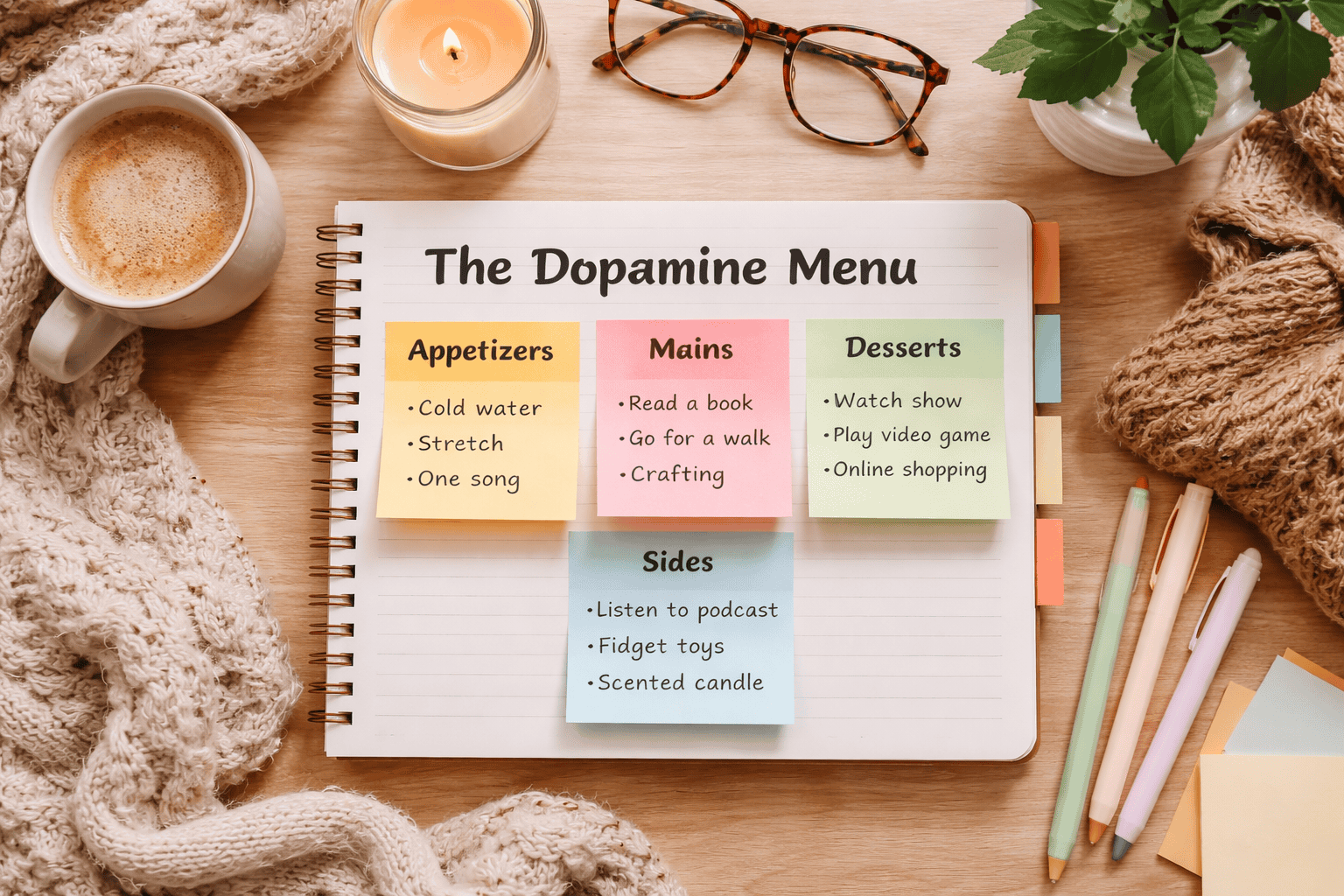
- Practical support. Coaching, routines, planners, reminders, reduced distractions and adjustments at school or work.
- Everyday foundations. Regular exercise, enough sleep and a steady routine can make symptoms easier to manage. They are not a treatment on their own, but they help.
Many people use more than one of these at once, for example medication alongside coaching, or school support alongside parent training. The mix is something to work out with the clinician who knows you or your child.
Where Cognitive Pattern Reprogramming Fits
Cognitive Pattern Reprogramming draws on Clinical Hypnosis, Strategic Psychotherapy and Neuro-Linguistic Programming. Clinical Hypnosis creates a highly focused state of attention, Strategic Psychotherapy identifies and works with unhelpful patterns, and NLP techniques interrupt those patterns and anchor more useful responses. It is delivered as guided audio. You stay aware and in control the whole way through, and it is designed to sit alongside anything else you already use.
It does not diagnose or treat ADHD, and it is not a substitute for assessment, medication or therapy. What it is aimed at is the pattern that tends to build up around ADHD over years: the self-criticism when something goes wrong, the replaying at night, and the overwhelm that shows up before a task has even started. Sessions are 15 to 20 minutes of audio you can listen to at a quiet point in the day, and results vary from person to person.
The sessions are created by Rob Edmonds, who holds a Diploma of Clinical Hypnosis and Strategic Psychotherapy. There is more on how ADHD can feel from the inside in what ADHD can feel like from the inside.
It is designed to work alongside professional care, not replace it. If you are being treated for ADHD, keep going with that, and talk to your clinician before adding anything new.
When to Talk to Someone About ADHD
Distraction, forgetfulness and restlessness happen to everyone. It is worth talking to someone when they are frequent, intense and getting in the way. For example, if you or your child:
- struggle with focus or organisation nearly every day
- regularly miss deadlines, lose things or feel overwhelmed
- have strong emotional reactions, big mood swings or low self-esteem
- are having ongoing trouble at school, at work or in relationships because of forgetfulness or impulsivity
Start with your GP, who can refer you to a paediatrician or psychiatrist for assessment. Teachers are often the first to notice signs in children, while adults may have spent years hiding the difficulty, so a proper assessment can bring a lot of clarity.
If you are struggling to cope, feel hopeless or have thoughts of harming yourself, please do not wait for an assessment. Call Lifeline on 13 11 14, or 000 in an emergency.
Questions People Ask About ADHD
What is ADHD?
ADHD, or Attention-Deficit/Hyperactivity Disorder, is a neurodevelopmental condition that affects attention, impulse control and activity levels. It is not caused by laziness, poor parenting or a lack of intelligence. It usually starts in childhood, often continues into adulthood, and looks different from one person to the next.
Is ADHD a real medical condition?
Yes. ADHD is a recognised neurodevelopmental condition, described in the diagnostic manuals clinicians use and covered by Australian clinical guidelines. It is diagnosed by a paediatrician, psychiatrist or other qualified clinician after a proper assessment.
Can adults have ADHD if they were not diagnosed as children?
Yes. Many adults are diagnosed later in life, often because their difficulties were put down to personality, anxiety or not trying hard enough. For an adult diagnosis, a clinician looks for signs that were present in childhood as well as the difficulties the person has now.
What are the early signs of ADHD in children?
Early signs of ADHD in children can include trouble sitting still, interrupting, not finishing tasks, losing things, daydreaming and seeming not to listen. Plenty of children do these things sometimes, so what matters is a pattern that shows up across home and school over a long stretch of time.
Does ADHD affect intelligence?
No. ADHD affects how a person manages attention, starting and finishing tasks and holding back impulses. It says nothing about how intelligent they are, and people with ADHD are found at every level of ability.
Does ADHD go away with age?
ADHD often continues into adulthood, although the way it shows up tends to change. Physical restlessness often eases, while difficulties with organisation, time and focus can stay. Many adults find strategies and support that make daily life easier to manage.
How is ADHD diagnosed in Australia?
In Australia, ADHD is usually diagnosed after a GP referral to a paediatrician for a child or a psychiatrist for an adult. The assessment looks at history, current difficulties and information from people who know the person well, such as parents or teachers. There is no single test, blood test or brain scan for ADHD.
Do you need medication to treat ADHD?
Not everyone with ADHD takes medication. For many people medication is an important part of treatment, and for others non-medication supports are the main approach. Whether medication is right is a decision to make with the doctor who assesses and treats you.
Should I stop my ADHD medication if I start using Cognitive Pattern Reprogramming?
No. Cognitive Pattern Reprogramming is designed to sit alongside medical and psychological care, not to replace it. Nothing on this page is a reason to change or stop a prescribed medication, and that decision belongs with the doctor who prescribed it.
Is Cognitive Pattern Reprogramming hypnosis?
Yes. Clinical Hypnosis is one of the approaches used within Cognitive Pattern Reprogramming. CPR draws on Clinical Hypnosis, Strategic Psychotherapy and Neuro-Linguistic Programming. The hypnotic state is a highly focused state of attention in which the therapeutic work takes place. The sessions are delivered as guided audio and the listener remains able to hear and respond throughout.
Where should I start if I think I have ADHD?
If you think you or your child may have ADHD, start with your GP. They can talk through what you have noticed, rule out other causes and refer you to a paediatrician or psychiatrist for assessment if it looks worth doing.